Three different ways to enter the forex brokerage business, three very different levels of cost, control, and ownership. Here's how to tell which one actually fits where your business is today.
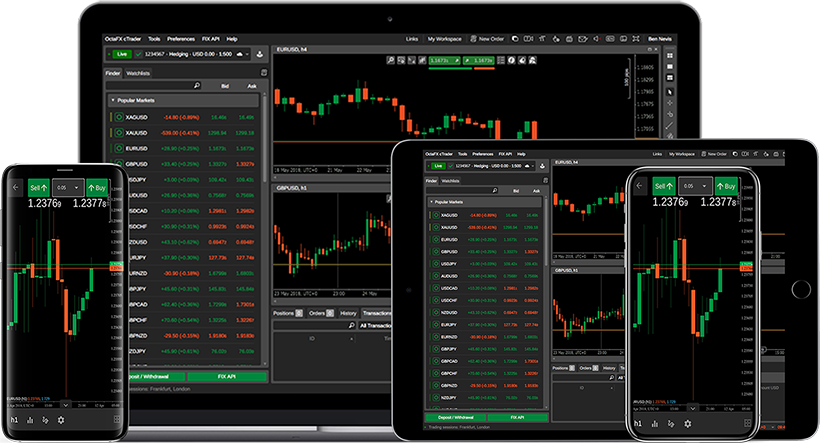
"MT5 grey label" is sometimes written as "gray label," and the comparison against white label is occasionally mistyped as "main label vs gray label" — but the underlying question is the same: how much of the brokerage stack do you actually want to own, and how much are you willing to pay and wait for that ownership? Here's the honest breakdown of all three models.
| Factor | Introducing Broker | Grey Label | White Label |
|---|---|---|---|
| Own MT5 server license | Not applicable | Not required | Required |
| Branded platform & CRM | No | Yes | Yes |
| Typical setup time | Days | 2–5 weeks | Several weeks to months |
| Infrastructure control | None | Limited (shared server) | Full (dedicated server) |
| Revenue model | Referral commission | Spread/commission on own clients | Spread/commission on own clients |
You want to test the forex market with essentially no upfront investment and don't need your own brand, CRM, or client data ownership yet.
You want a real branded brokerage — your logo, your domain, your CRM and client relationships — without the cost and delay of an independent MT5 server license. This is the model most first-time brokers should start with.
You've already proven the business model on a grey label, have meaningful trading volume, and need full infrastructure control, your own server-level configuration, and no shared-infrastructure dependency.
The same handful of concepts get written a dozen different ways across the industry — here's what each term actually means.
A branded MetaTrader 5 brokerage that runs on a provider's existing, licensed MT5 server instead of your own independent license. Also spelled "MT5 gray label."
A branded MetaTrader 5 brokerage built on your own independent, dedicated MT5 server — full infrastructure control, higher setup cost and time.
The American-English spelling of "forex grey label" — a branded forex brokerage operating on a licensor's shared platform infrastructure.
Shorthand for "forex gray label," using the common industry abbreviation "FX" for foreign exchange — the same shared-infrastructure brokerage model.
The same model in a different word order — a forex brokerage running under a gray label arrangement rather than its own independent license.
The word-order variant of "MT5 white label" — a fully independent, brokerage-owned MetaTrader 5 setup with a dedicated server.
A forex brokerage with its own dedicated trading server and full platform ownership, as opposed to a grey/gray label's shared infrastructure.
The general, platform-agnostic term for a branded brokerage running on shared, licensor-owned infrastructure rather than its own independent license.
An Introducing Broker refers clients to an existing broker and earns commission — there is no branded platform, no CRM of your own, and no client fund handling. A grey label gives you a fully branded MT5 platform and your own CRM, with clients trading under your name, while the server infrastructure remains shared.
No — "main label" is a common mis-typing of "white label." A full MT5 white label is the model that includes your own independent, dedicated MT5 server license.
Introducing Broker has the lowest cost since there's no platform or CRM to license, but it also offers the least ownership and revenue potential. Among the models that give you a branded platform, grey label is consistently the lower-cost entry point compared to a full white label.
What to verify before signing with any MT5 grey label provider.
Read ArticleThe growth signals that mean it's time to move off a shared server.
Read ArticleThe full reference breakdown of setup fees and recurring costs.
Read the GuideTell us your stage and budget — we'll recommend grey label, white label, or a growth path between the two.
Talk to XacUsd